
It's just a phone: A 9 month long-term review of the iPhone Air
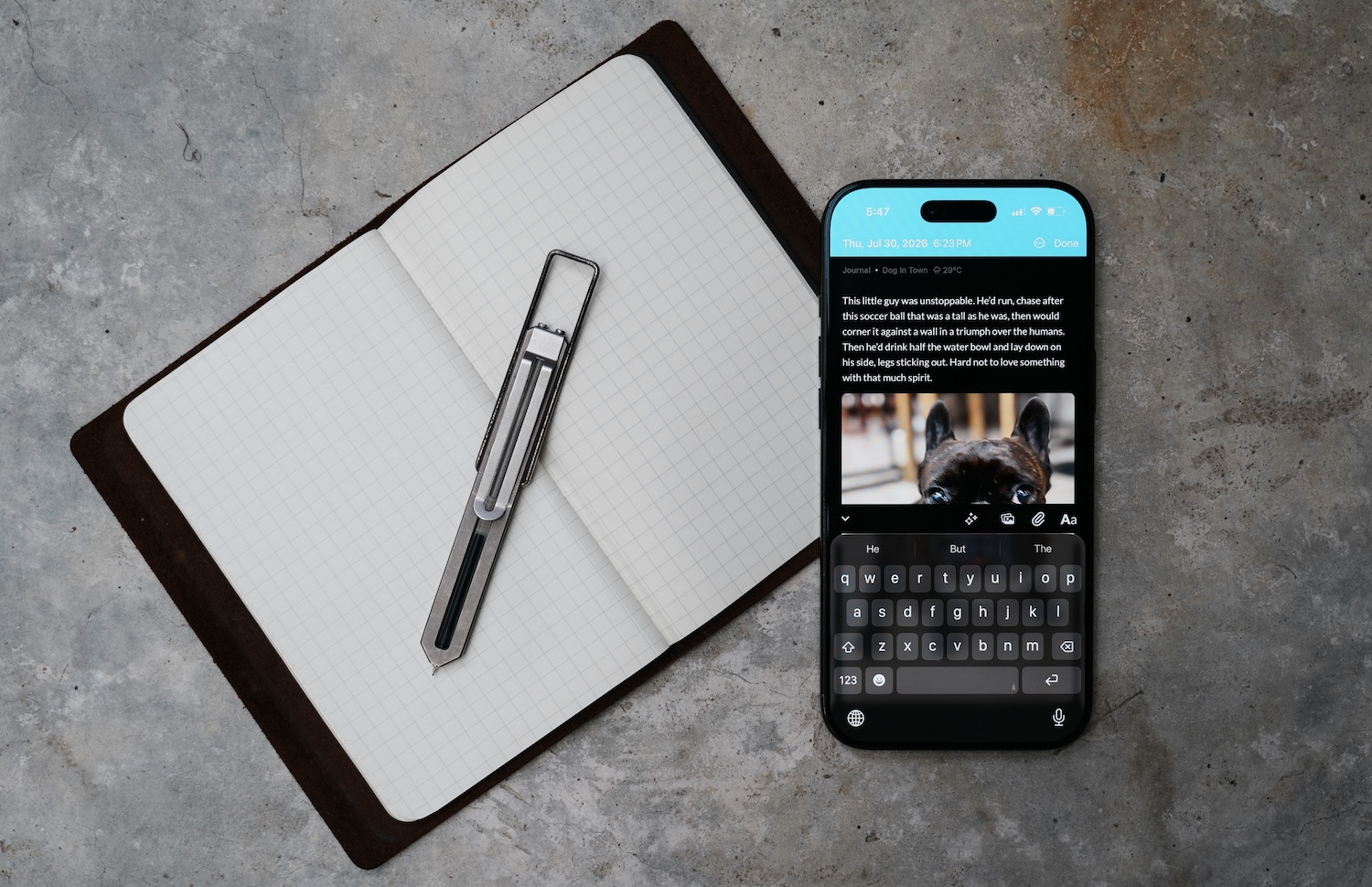
I only think about my iPhone Air being, well, an Air when I pick up someone else’s phone. Like picking up a glass of water that you expect to be half-empty but is actually full and it, momentarily, feels like the laws of gravity broke (or, more often, turns out to be nearly empty and you nearly propel the remaining liquid into your face), our brains estimate what force an object requires and very quickly reset to our new normal.
The iPhone Air, very quickly, just becomes normal, the way a phone should feel.
Then you go pick up an iPhone Pro and it feels surprisingly heavy. An iPhone Pro Max doesn’t feel like it should be a phone at all. The thickness, the density, the weight distribution all feel odd, at first.
The iPhone Air feels like the future, in the same way the iPhone X did. And maybe it’s an aberration, a mistaken fork in the road that’ll quietly die off, just as the iPhone X rounded edges gave way to blockier iPhone designs that felt thicker even while they were technically thinner.
But I’d bet the iPhone Air’s feel is here to stay, regardless if the Air sticks around as a category. It’s what the folding iPhone will feel like unfurled. And it feels rather incredible on its own, too.
The accidental budget iPhone
I didn’t intend to upgrade to the iPhone Air.
But it was tempting. You pick it up in the store and it feels different, nicer, a clear evolution over the iPhone style we’ve learned to recognize by touch. There were downsides, sure—a single camera, worse battery life—yet maybe that was the excuse I needed to use my real camera more.
The list pricing at $999, exactly what the iPhone X retailed for, made that a stretch, though, as did local market pricing of around $1,200 for the iPhone Air with tax and duties included.
The market seemed to agree, as it was discounted quicker than I ever recall seeing for a new iPhone. Official resellers in my market had the iPhone Air listed for $875, tax included, by December 2025 (and a cursory look around resellers globally shows prices in that range today). That pricing felt like a sweet spot to me; a reasonable bump over the standard iPhone pricing (what with its two cameras and better battery proves a better in specs phone, if not in look and feel) and a significant savings over the iPhone Pro.
Goodbye to my well-used iPhone 13 Pro with its somehow-blued patina, and an eSim swap later I was in business with a phone that, for the first time in several iPhone upgrades, felt like a good value to me (and perhaps increasingly so, if the ram shortage hits base iPhone prices).
The iPhone Air feels nice, and is durable.
For the first time in a while, I had an iPhone that felt like it disappeared in my pocket. It feels at first impossibly thin, a smooth piece of nicely balanced glass and titanium. It feels like the future, before your brain rewires and it feels normal and everything else feels heavy and dated in comparison.
iOS 26 and its transparency somehow, to me, felt designed for this phone. The design struck me as somewhat cramped on the iPhone 13; here, it feels natural. Perhaps that was the new device magic speaking at first, but I’ve long had a feeling that Apple both designs in public ahead of time (with hints of future features showing up in niche products first) and designs new operating systems with a specific device in mind, and iOS 26 felt designed for the iPhone Air. Perhaps.
The action and camera buttons were new to me, coming from the iPhone 13. The latter I use for opening the camera, but rarely as a shutter; it’s too easy to shake the phone when doing so, more so than when using volume buttons as a shutter. The former I quickly mapped to open the flashlight, and unreasonably love that. We taught sand how to think, so we could have a flashlight in our pockets activated by a clicky titanium button.
The iPhone Air also feels best without a case. Yes, that’s living dangerously, but you get a thin phone for its thinness, and I’ve already gone caseless for years.
My iPhone Air has taken at least three falls: Once when I was disembarking a ferry, a couple others when it slipped out of my hand. The black titanium frame now has two scuffs on the paint as a result, something I bet it wouldn’t have if the edge was brushed raw titanium. The screen has a few micro scratches, fewer than my iPhone 13 but difficult to directly compare.
One odd thing has surprised me the most: Dust gets stuck in the top speaker where I never had that problem with previous iPhones. It’s tough to get out, too, and when I used the edge of a piece of paper to nudge it out, it got stuck in the gap between the frame and screen. I’ve found that using a piece of tape to lift dust out of the speaker works the best. And speaking of the speaker: It’s fine. I don’t listen to audio through my iPhone speaker all that much, but on the rare occasion I stream a documentary before falling to sleep, it’s fine—not at all enough worse to notice, as no phone’s speaker sounds that great.
The iPhone Air’s single camera is fine, but I do miss the wide lens.
My Apple Photos library shows 17,007 photos taken on my iPhone 13 Pro over 4 years.
Of those, 9% were taken with the zoom lens, 17% with the wide lens, 22% with the the front-facing camera (nearly all group selfies, I promise), and 51% with the standard lens.
You can always zoom with your feet, and back up to get more of the subject in the frame. The iPhone Air’s single rear camera wouldn’t be that much of a downgrade, I reasoned. And that’s as someone who unreasonably loves wide lenses, enough that I had a 10-22mm lens for my Canon DSLR, then a decade later replaced it with a 14mm lens on a Sony mirrorless camera. That would cover my love of wide photography; the iPhone Air’s standard lens would suffice.
And it does. It’s good enough. But not great.
The iPhone wide lens focuses closer than the standard lens. Which is annoying, at times, when your photo comes out darker or grainier than expected. Then you switch to the iPhone Air and find yourself pulling your phone back to scan QR codes and receipts that, previously, felt more natural to snap. That, and the wide lens adds extra data to your camera app, so you can see around what you’re framing, even if you’re snapping the final photo with the standard lens.
To me, as someone who was willing to pay extra to buy a wide lens, I’d often wondered why Apple would put the wide lens in the cheaper iPhones. I thought the zoom would be something most people would want, and the wide lens a more sensible premium upgrade. Turns out, the wide lens has more practical uses, and the zoom is what would tempt most people to upgrade, and that plays better into Apple’s goals.
Expect the foldable iPhone—and the next iPhone Air, if there is one—to ship with a wide lens if there’s space for two.
The iPhone Air’s battery life is ok. Just ok.
The iPhone Air’s battery life is ok for me on most work days. I set it to charge to 90% every night, and typically run it down to 20% or so by night.
On heavy usage days, though, it does require a top-up charge. That, or low-power mode which conserves battery more than I’d expected. On a recent trip, with heavy Maps, Translate, and camera usage, I was using a power bank by lunch. So the next day I let it charge full and turn on low power mode before setting out for the day. Lo and behold, I got through a whole day of travel with moderate phone usage without a problem. I was shooting most photos on my real camera, which helps, but still was impressed at how much the low power mode stretches battery life.
You do feel the phone’s bump get warm if you’re shooting video or doing anything more computationally intensive.
If you’re shooting video all day, are regularly gaming, or otherwise are a heavy phone user, the iPhone Air’s battery is likely not sufficient. But for someone with (checks stats) around 3.5 hr of average phone usage a day, it’s perfect—you’ll just want a power bank if you’re traveling.
Would I buy the iPhone Air again? Absolutely.
Everything requires tradeoffs, and the iPhone Air puts those tradeoffs in stark relief. The just-an-iPhone iPhone is the affordable option, with the expected tradeoffs in build quality, cameras, and processing power. The iPhone Pro is the premium option, with better processing, cameras, and battery life at the expense of weight and money (though, with the iPhone 18 series, with not as much of a design upgrade as usual with the switch back to aluminum).
The iPhone Air sits in an uneasy middle. It’s nicer in some ways than the iPhone Pro: Thinner, lighter, titanium. It’s the quintessential iPhone, an aspirational device of sorts. Yet thinness requires tradeoffs of a smaller battery, fewer cameras, and a device that runs hot.
The iPhone Air is great if your iPhone is a phone, not the only device you’re using throughout the day. It’s a phone that’ll make every other phone feel heavy and dated.
And I suspect that, a decade from now, the iPhone will look more like the iPhone Air than the current iPhone Pro.
Thoughts? @reply me on Twitter.